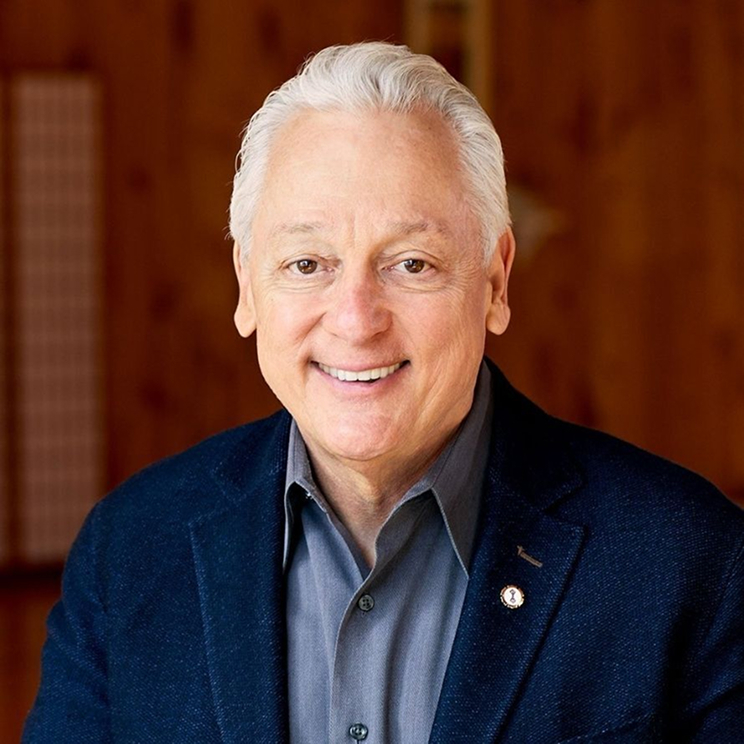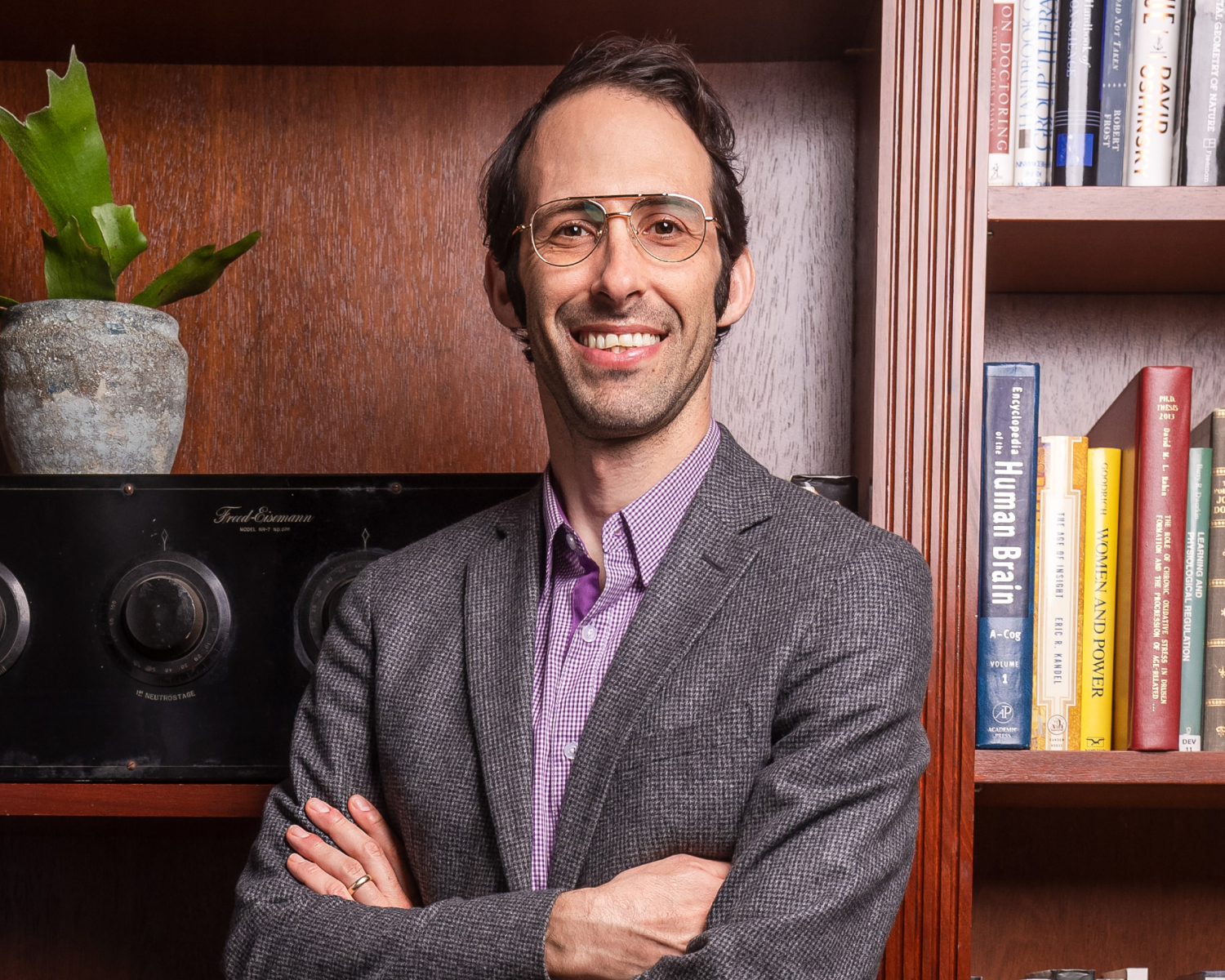


His work connects chronic stress and physiological safety to the growing question of how clients come off SSRIs.
As interest in psychedelic therapy grows, practitioners are meeting more clients who want to begin this work while still taking an SSRI or another serotonergic antidepressant. Helping those clients well requires an understanding of how the body adapts to stress, to medication, and to change.
Dr. Dave Rabin brings that understanding from several directions at once.
A board-certified psychiatrist and neuroscientist, Dr. Rabin has spent more than 20 years studying the impact of chronic stress on the brain and body. His work spans clinical psychiatry, neuroscience research, psychedelic-assisted therapy, and health technology, with a focus on treatment-resistant depression, PTSD, and anxiety. His research includes the study of how trauma responses are regulated at the epigenetic level, work intended to clarify how psychedelic-assisted therapy produces its effects.
He is one of the few psychiatrists trained in advanced psychedelic-assisted therapy who also carries a general psychiatric caseload, and his clinical work includes the responsible reduction of psychiatric medication when it is no longer serving the patient.
How the Nervous System Adapts to SSRIs
Public conversation about psychedelics tends to focus on the experience itself. Dr. Rabin’s clinical and research work draws attention to the physiological conditions that shape how an experience is received and integrated.
In his view, baseline regulation, stress load, and physiological resilience all influence the safety and effectiveness of psychedelic interventions. The same attention to physiology applies to SSRIs. When someone takes one for years, their nervous system adapts to its presence. The drug leaving the body and the body adjusting to its absence are two separate events, and the adaptations built up over years take much longer to unwind. That unwinding is what clients feel during a taper. This is why a common belief among practitioners, that a client is fine once the medication has cleared, so often proves wrong.
For practitioners, this means that readiness depends on the state of the body as well as the state of the mind.
Chronic Stress and the Role of SSRIs
A central area of Dr. Rabin’s research is the effect of chronic stress on human functioning. Persistent activation of the stress response is associated with patterns seen in anxiety, PTSD, and depression, including heightened reactivity and difficulty returning to baseline.
This research informs how he explains what SSRIs do. He describes the emotional range as a window with despair at one edge and euphoria at the other. For someone pinned against the difficult edge, SSRIs narrow that window and bring genuine relief. The window narrows from both ends, however, which is why many long-term patients say life has lost its sparkle. Dr. Rabin regards SSRIs as important stabilizers. As he explains, a taper plan was part of the treatment when these medications were first introduced. Over time, that exit plan dropped out of standard practice, and many patients now stay on these medications indefinitely.
Sequencing the Transition Off SSRIs
Sequencing becomes essential when a client on an SSRI wants to begin psychedelic work. Based on his clinical experience, Dr. Rabin holds that most psychedelic medicines do not combine safely with serotonergic antidepressants. In his view, the combination can introduce a risk of serotonin syndrome, which is a medical emergency, and he often puts the stakes in plain terms by saying that the worst place a psychedelic experience can land someone is the ER.
He also points out that SSRIs can blunt the psychedelic response, sometimes almost entirely. A client who journeys too soon after stopping may feel very little and wrongly conclude that the medicine does not work for them. Dr. Rabin teaches practitioners to see the timing between an SSRI taper and psychedelic work as an intervention in its own right. His protocol includes ketamine as a bridge, because it acts on the glutamate system and is compatible with SSRIs.
Integration After Coming Off SSRIs
Dr. Rabin describes integration as a process with both psychological and physiological dimensions. Insight matters, but lasting change depends on how new patterns become stable in the body over time.
This view shapes how he reads the weeks after a client comes off an SSRI. As the emotional window reopens, feeling tends to return across the whole range, with more tears alongside more laughter. That full-spectrum return is intense but expected. A relapse of the original condition looks different, because nothing returns on the bright side. Understanding this distinction helps practitioners keep clients steady through a stage that can feel alarming from the inside, and it can prevent an unnecessary return to medication.
Technology and Regulation
Dr. Rabin is co-founder and Chief Medical Officer of Apollo Neuroscience, where he helped develop the Apollo Neuro™. The wearable delivers gentle, touch-based signals that support calm, focus, and relaxation, and its design reflects research into how sensory input influences the autonomic nervous system.
His interest in regulation is central to how he approaches life after SSRIs. His approach treats staying off medication as a harder and longer task than coming off it. Breath, touch, sound, sleep, movement, and light all contribute to the baseline stability a client needs once the medication is gone, and he treats these practices as a core part of care.
Supporting Safety and Standards
Dr. Rabin also serves as Executive Director of The Board of Medicine, a nonprofit that develops clinical safety guidelines for emerging and alternative treatments, including psychedelic-assisted therapies.
His safety teaching draws on what practitioners report in the field. For years, he has asked training audiences whether they or their clients have had a serious reaction from combining psychedelics with this kind of medication, and in almost every room someone raises a hand. In those cases, the doses involved were the smallest ones used in the field. He uses these accounts to show that contraindications deserve careful attention at every dose level.
Collaboration with the Psychedelic Coaching Institute
Dr. Rabin has taught at the Psychedelic Coaching Institute for several years, including as co-teacher of the Psychedelic Safety and Harm Reduction Certification with Paul Austin.
He is serving as core faculty for the SSRI Deprescribing and Psychedelic Readiness Certification. The training is built on the protocol he uses in his own clinic, and it follows the full arc of a client’s transition. It begins with readiness assessment and screening, moves through the taper itself and the distinction between withdrawal and relapse, the regulation practices that help clients stay off, and the eventual transition into psychedelic work.
Throughout, the training places emphasis on scope of practice and on building working relationships with prescribers, so that professionals of every background understand where their role begins and ends.
The training grew out of a gap Dr. Rabin names openly. His psychiatric training lasted more than sixteen years and included a medical degree and a doctorate in neuroscience, yet it never taught him how to safely transition patients off serotonergic antidepressants. Rather than wait for medical institutions to address that gap, he chose to teach what he has learned in practice.
A Practitioner-Oriented Perspective
Several themes from Dr. Rabin’s work apply directly to practitioners:
- Physiological state deserves the same attention as psychological readiness.
- SSRIs change the nervous system, and those changes take time to reverse.
- Careful sequencing protects clients from interaction risks and gives psychedelic work its best chance of helping.
- Long-term stability after SSRIs depends on regulation practices that continue well after the taper ends.
Looking Ahead
Psychedelic therapies are moving toward regulatory approval, and many of the people who will seek them are currently taking an SSRI. The quality of care surrounding that transition will shape how safely and effectively the field grows.
Dr. Rabin’s work invites practitioners to consider the whole arc of care, from the medication a client takes today to the stability they build in its aftermath.
SSRI Deprescribing & Psychedelic Readiness Certification
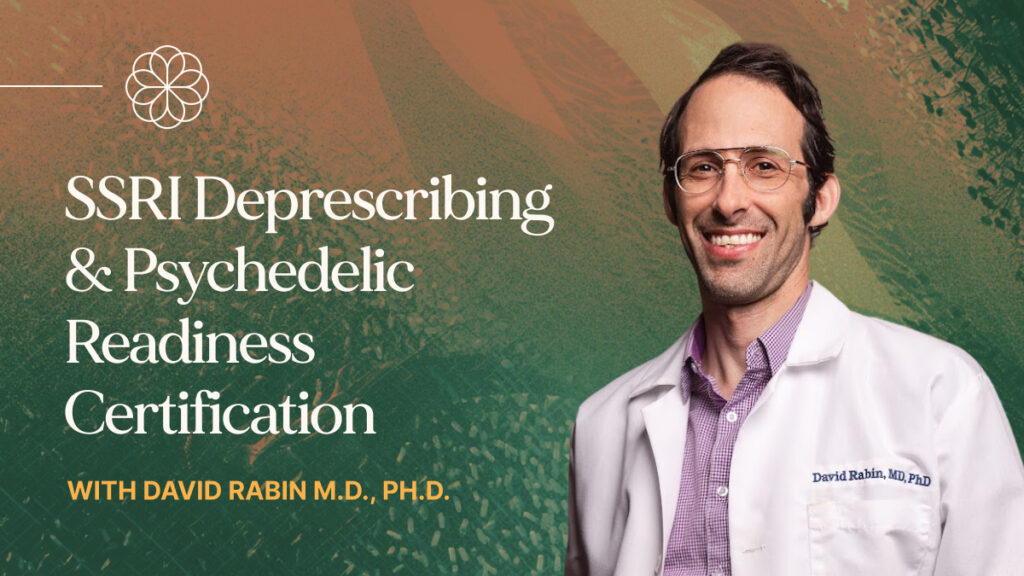
Learn the full protocol directly from Dr. Dave Rabin. Six live 90-minute sessions, six facilitated labs where you work real cases, and pre-publication access to his clinical deprescribing manual. Three months, starting October 7. 7.5 CE credits available for eligible clinicians.
SEE THE FULL CURRICULUM →