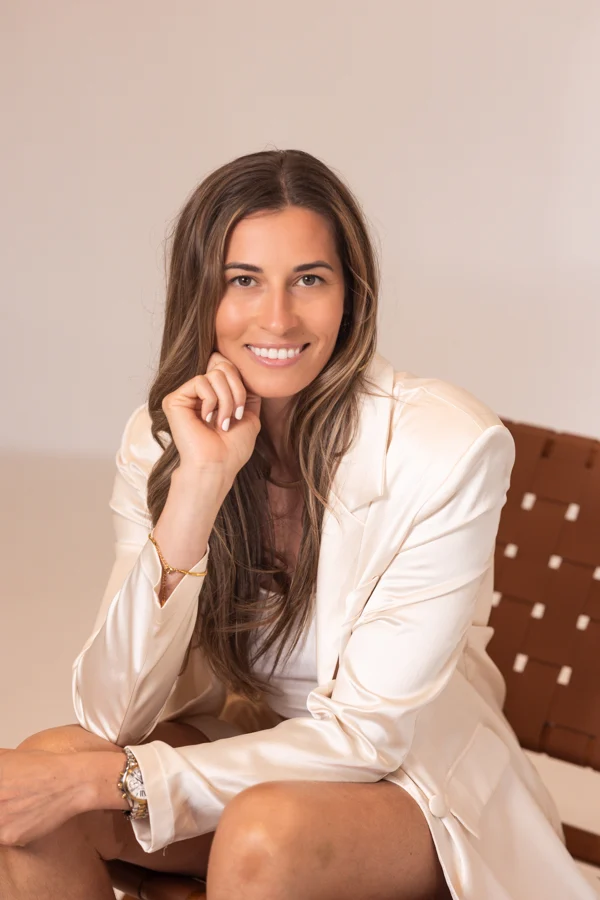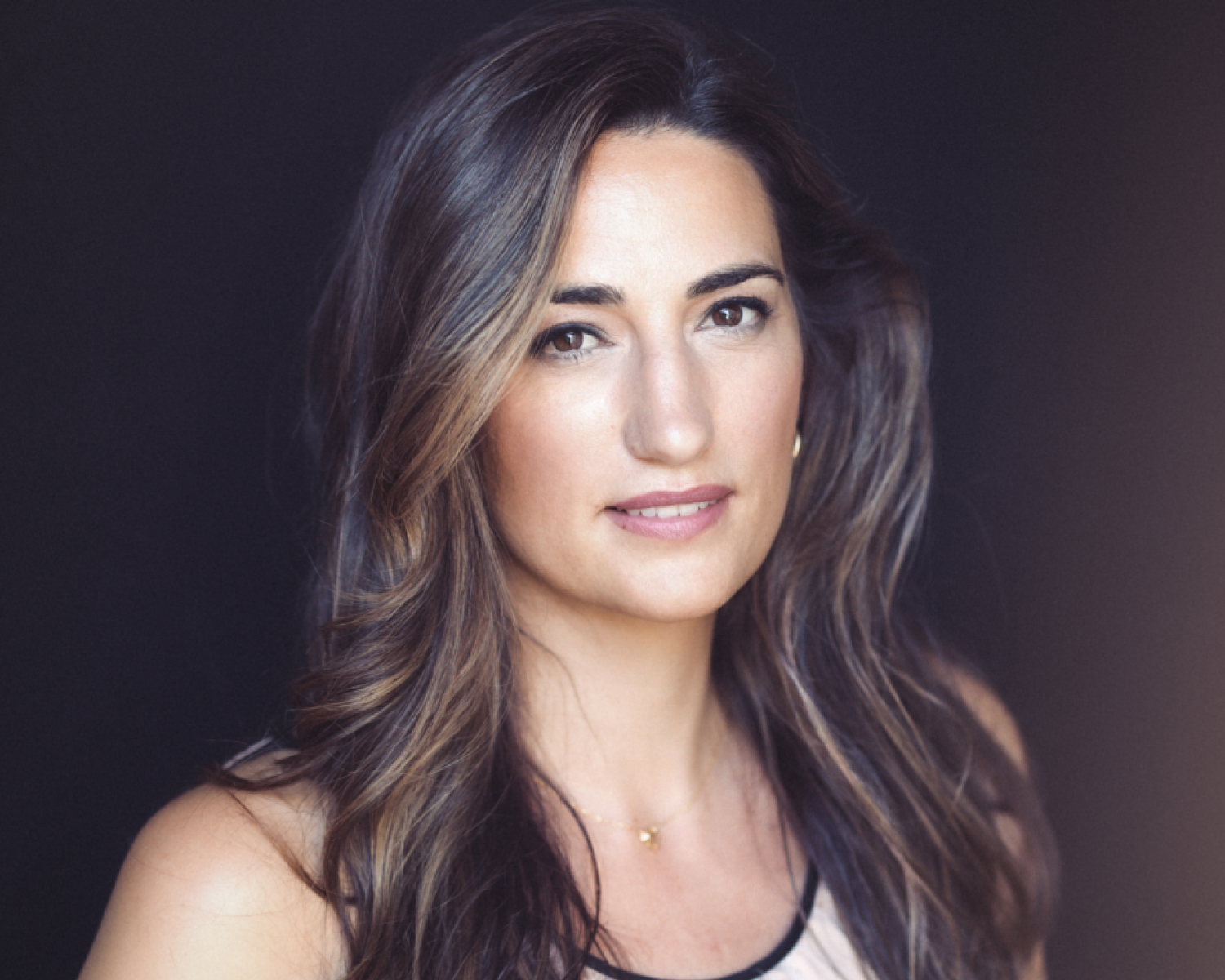


Natasja Pelgrom is a leadership advisor and practitioner mentor whose work centers on the inner development of the people who lead and hold space for others. She is the founder of Awaken the Medicine Within, which has offered legal, holistic entheogenic retreats in Europe since 2017, and the Eudaimonia Institute, a learning platform for professional education, practitioner development, and leadership training.
Her mentorship and supervision are grounded in Presence-Centered Leadership™, a framework she created, and focus on ethical reflection, discernment, boundary clarity, and professional maturity.
Natasja has served as faculty for both the Microdosing Practitioner Certification and the Psychedelic Practitioner Certification, where she has taught Facilitating Transformational Coaching. She will teach a live session for the upcoming cohort of the Microdosing Practitioner Certification, which begins on November 3, 2026. The session sits in the program’s second module, Practitioner Skills. This is where students build presence, inquiry, and ethical holding as they start working with their own clients.
After nearly a decade of facilitating, mentoring, and supervising practitioners, Natasja has become less interested in extraordinary experiences and more interested in what helps change endure. In the reflections below, she shares why readiness deserves a more honest conversation and the question that guides almost everything she teaches: who is a person becoming through this work?
Questions with Natasja
From your perspective, what feels most important for the psychedelic field to get right in the next 5–10 years?
I think one of the biggest mistakes we could make is treating psychedelics as though they are something entirely new. In many ways, they are reminding us of something our culture has forgotten.
For thousands of years, societies had rites of passage, initiation, and shared frameworks that helped people make sense of profound transitions. We have become very good at treating symptoms, but far less equipped to help people navigate questions of meaning, identity, grief, purpose, and belonging.
The conversation around psychedelics has understandably focused on the mental health crisis. That work is important, but I think there is an equally significant crisis of meaning. Many people are not only asking, “How do I feel better?” They are asking, “Who am I becoming? How do I live? What gives my life meaning?”
For me, the next decade is less about scaling access and more about maturing the field around it. We need practitioners who understand that these experiences are not just altered states. They are often threshold experiences that ask something of a person’s life afterwards.
How do psychedelics intersect with your work, and what feels most misunderstood from where you sit?
My work sits at the intersection of leadership, human development, ritual, and practitioner development. Psychedelics are part of that, but they are not the centre of it.
I think one of the biggest misunderstandings is that transformation happens because of the experience itself. In reality, the experience is often the beginning. The deeper work is learning how to metabolize what you’ve seen without turning it into another identity, belief system, or story about yourself.
For me, the real work is helping people develop the discernment to know the difference between having a profound experience and becoming a wiser human being.
What do you think practitioners today most need to cultivate in themselves, not just learn intellectually, in order to work responsibly with these tools?
I think the most important thing practitioners can cultivate is self-awareness, not as an idea but as an ongoing practice.
The person facilitating is always part of the process. Their fears, unmet needs, attachment patterns, relationship with authority, desire to be needed, financial pressures, and unconscious blind spots all enter the room with them. Psychedelics don’t erase those dynamics. In some cases, they can magnify them.
One thing I wish we spoke about more openly is readiness. Completing a training or certification does not automatically mean someone is ready to hold others. Sometimes, during a course, you discover that you are barely able to hold yourself. There should be no shame in that. In fact, that level of honesty is one of the strongest indicators that someone may eventually become a trustworthy practitioner. Knowing your current limits is far safer than believing you have outgrown them.
To me, responsible practice is less about mastering a method than becoming someone who can be trusted with another person’s vulnerability.
Is there a principle, practice, or insight that has become central to how you approach healing and transformation? How did that understanding develop for you?
One insight has shaped almost everything I do: transformation is not measured by what happens during an experience, but by how a person lives afterwards.
Early in my work, I noticed that people could have extraordinary experiences and still return to the same relationships, the same patterns, and the same ways of making decisions. Others had much quieter journeys, yet over time their lives changed profoundly. That made me question the assumption that intensity equals transformation.
Over the years, after sitting in well over a thousand ceremonies, I became less interested in the experience itself and more interested in what helps change endure. What do people choose to do differently on an ordinary Tuesday morning? How do insights become embodied rather than remembered?
That gradually shifted my work away from facilitating experiences and towards developing people. Today I’m as interested in discernment as I am in insight.
What’s a question you find yourself returning to again and again in your work right now? Why is it important to you?
The question I keep returning to is: Who is the person becoming through this work?
I’m not asking what they experienced, what insights they had, or how many ceremonies they’ve sat in. I’m interested in who they are becoming as a human being, and I ask the same question of myself, of leaders, and of practitioners.
Are we becoming more humble, more able to repair when we’ve caused harm, and more capable of sitting with uncertainty?
The older I get, the less interested I am in extraordinary experiences and the more interested I am in ordinary integrity. It shows up in how someone treats their partner, how they navigate conflict, how they lead a team, and how they respond when they’re wrong. To me, that is where the real measure of transformation lives.
When you think about microdosing specifically, what do you see as its most responsible or promising role within the broader psychedelic ecosystem? Where does discernment matter most?
I see microdosing as one tool within a much larger landscape. I don’t think it should be viewed as a substitute for deeper therapeutic work, nor as a daily performance enhancer. Its value depends far more on the intention, context, and person than on the substance itself.
Where I think it shines is in supporting gradual change. For some people, it can create just enough space to notice habits, become more emotionally available, reconnect with creativity, or engage more deeply with practices such as therapy, journaling, meditation, or time in nature.
Where I think discernment becomes essential is when microdosing is used to avoid something. We live in a culture that constantly asks us to optimise, produce, and perform. If microdosing simply helps someone tolerate a life that is fundamentally out of alignment, then we’ve missed a much more important conversation.
For me, the question is always: What is this in service of? If microdosing helps someone become more present, more honest, and more engaged with their life, then it can be a valuable practice.
What excites you about contributing to this training at this moment in time?
To be honest, what excites me isn’t microdosing itself. I think it’s often overhyped and sometimes presented as a solution to questions that require much deeper work.
What does interest me is helping practitioners develop discernment. Whether someone works with microdosing or high-dose experiences, the same questions remain: How do we work ethically? How do we avoid projection? How do we know our limits? How do we support real integration rather than chasing experiences?
If I can encourage practitioners to develop themselves as much as they develop their knowledge, I feel I’m contributing something worthwhile.
Natasja Pelgrom’s perspective reflects the Psychedelic Coaching Institute’s commitment to training practitioners who take their own development as seriously as their technical skills. Through her work, Natasja reminds us that transformation shows up in the life that follows an experience: in how a person relates, leads, and responds when they are wrong.
If her reflections on readiness resonate, Natasja’s free Facilitator Capacity Check-In is a good place to start. The self-audit guides practitioners and aspiring facilitators through six dimensions of facilitation, from self-awareness and shadow to boundaries, ethics, and trauma awareness.
Learn more about Natasja’s work at natasjapelgrom.com and the Eudaimonia Institute, listen to The Awaken Podcast, or explore Guardians of Transformation, her in-person space-holding immersion with Awaken the Medicine Within.
Join Natasja in the next cohort of the Microdosing Practitioner Certification, starting November 3, 2026.