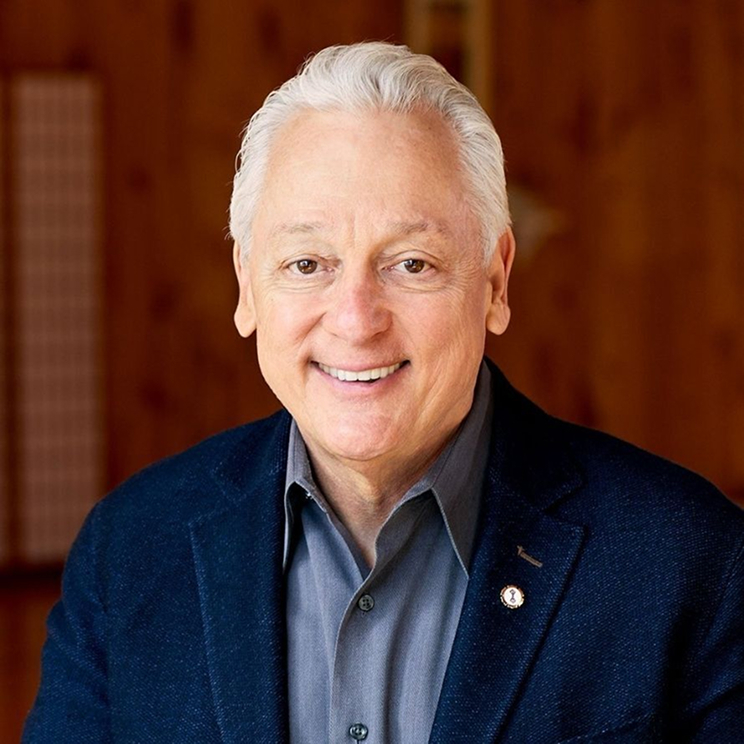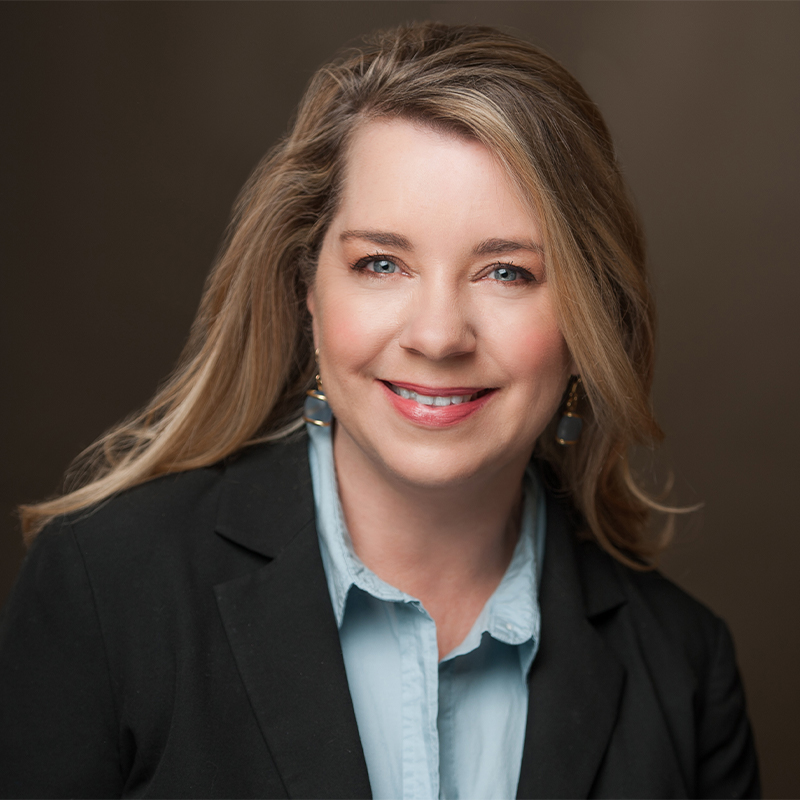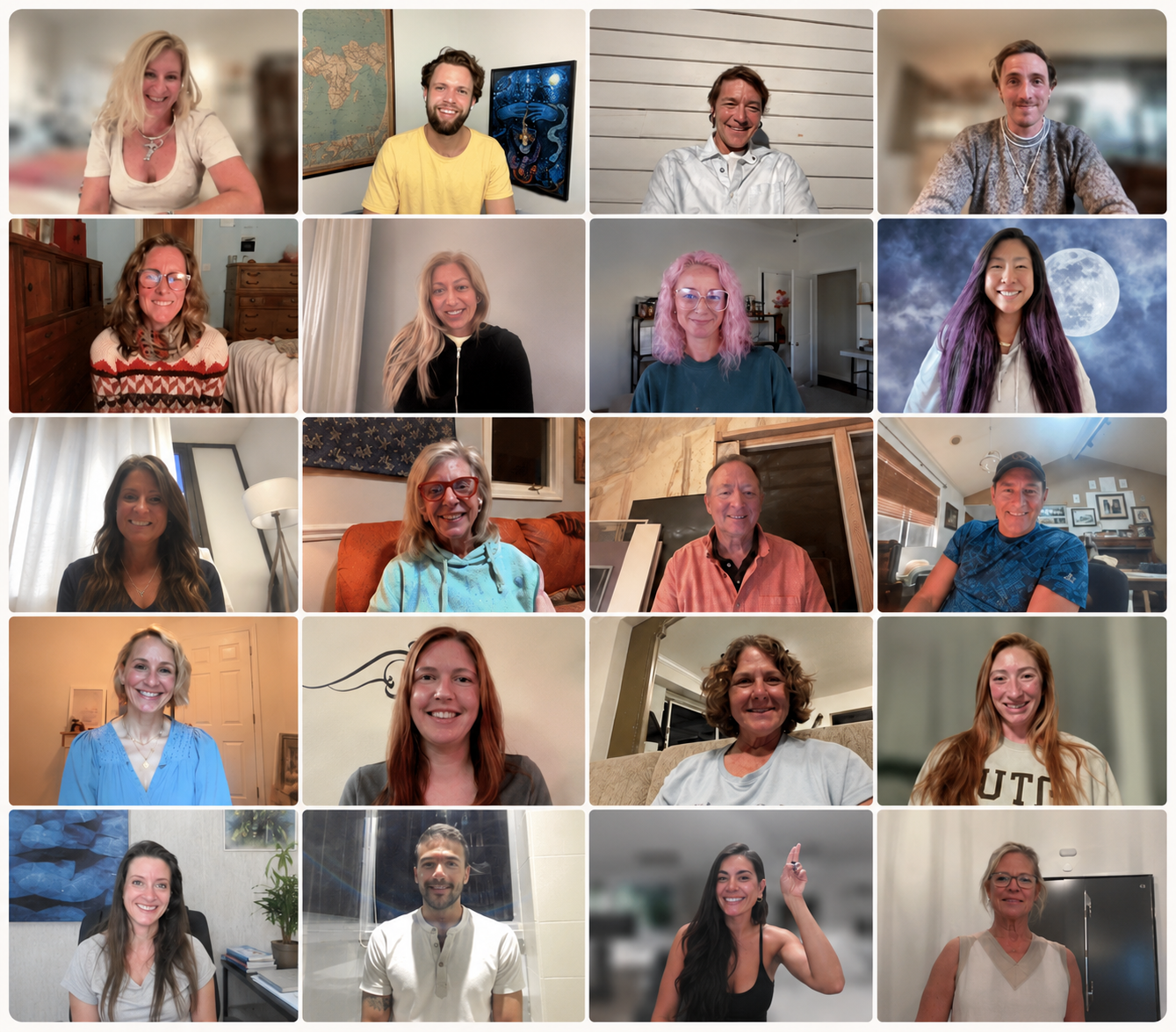

The three graduates who joined our recent alumni panel each came to this work from very different places in life.
A purpose coach in the Bay Area who’d been microdosing under a friend’s apprenticeship but kept hitting the same wall: no structure, no momentum, no accountability.
A recovering addict and electrical designer in South Mississippi who used microdosing to get clean in 2022 and saw a LinkedIn post about the program the same week he finally had the money in the bank to act on it.
An applied psychologist freshly out of graduate school, in the middle of a separation, trying to figure out what comes next.
Their lives looked nothing alike, and neither did their reasons for joining. What they had in common was the program they completed.
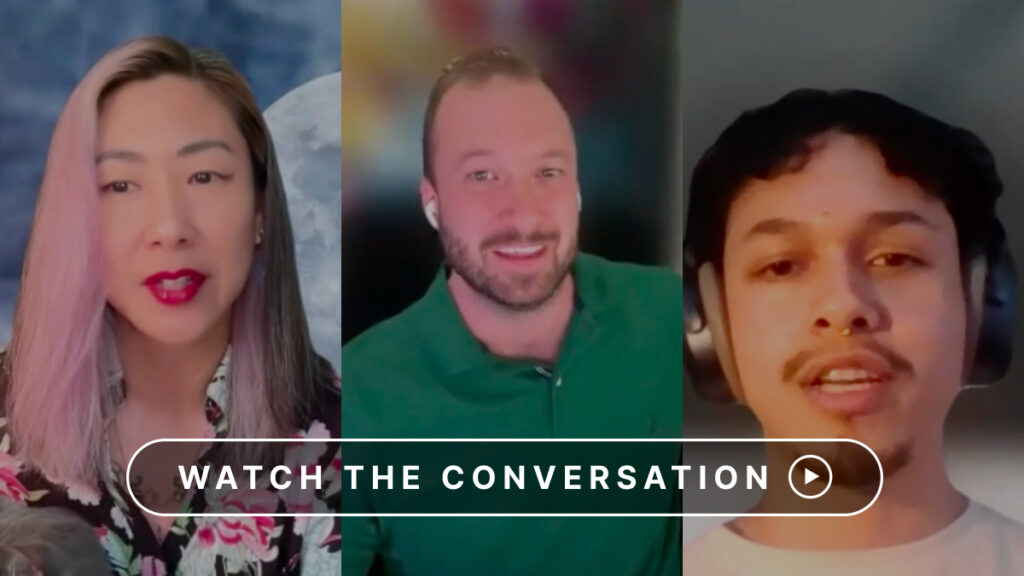
We recently hosted a conversation with all three of these Microdosing Practitioner Certification alumni: Dana Jung, Stephen Stewart, and Julian Pico. It was moderated by Joseph Anew, the Career Advisor at the Psychedelic Coaching Institute. You can watch the full recording below.
If you’re considering this path and wondering whether the program is right for you, their stories are the most honest answer we can offer.
Why They Said Yes
For Dana, it came down to structure.
“I was doing self-study for a little bit, actually under [a friend], apprenticing under her,” she said. “But I was lacking the structure and the accountability that I need to really build momentum. I’m a Virgo, so I love structure.”
For Stephen, it was timing.
He’d first heard a Third Wave podcast with François Bourzat and Christina Hunter back in 2019. The seed had been planted while he was still in active addiction. By the time the LinkedIn notification for the Microdosing Practitioner Certification arrived, he’d been clean two years, gotten his career back, and started a family.
“I had the money in the bank for the first time in my life. It was there. It was calling me,” Stephen said. “When the phone rings, pick it up. Just do it. If you’re feeling it in your gut and your intention is truly to serve and to just grow, then just answer that phone when it rings.”
For Julian, it came after the hardest semester of his life.
He’d just finished his master’s. His marriage was ending. He’d been aware of Paul F. Austin’s work for a decade, remembered watching one of his early TED talks on microdosing LSD. When the email about the Beta cohort landed in his inbox, he didn’t hesitate.
“I signed up to have a call with Joseph. There was nothing but straight alignment, what felt like straight alignment for me. I took the dive.”
Viewers tuning into the panel resonated immediately when he said simply:
“That’s why they call it a calling.”
What the Protocol Changed
All three came in with their own microdosing experience. None had worked seriously with San Pedro, also called Huachuma.
That was the first shift.
Stephen described his initial reaction: “Even once being introduced to mescaline extract itself, I was just thinking, okay, this is a mini dose or a macro dose thing. I never would have thought in a million years, hey, we could microdose this too.”
Working with a new medicine inside a structured protocol changed something for each of them. But the bigger shift was what came alongside the medicine.
Dana put it simply: “I think the biggest shift for me was pairing the medicine with the nervous system practices.”
She’d previously used microdosing to come off SSRIs after decades on them. What she’d lacked was the somatic infrastructure underneath: tools for sitting with what came up, finding stability when the waves hit, anchoring to a baseline she could actually return to.
Julian had been microdosing for ten years. He had his own yoga practice for seven. The connection between the two had never quite landed until he was inside the program.
“Being introduced to nervous system regulation just kind of felt like completing the circle,” he said. “Little did I think to make the connection that some of the best days I had were when I had microdosed and gone to yoga and came back and I was glowing for a few days.”
Paul’s framing during their orientation call stuck with him: microdosing mushrooms is more like moon energy. Microdosing San Pedro is more like sunlight.
“I just spent ten years in that moonlight state for better and for worse,” Julian said. “Now I’m opening up this whole new experience working with the Huachuma.”
Stephen’s example was more visceral. About a week before graduation, he was approached aggressively by a stranger at a public football game.
“In a moment where I should have had that spark that caused me to react, my reaction to him was more so like pondering. Like, what are you trying to gain out of this?” He turned his head and walked away. “The power of the pause. I think that’s what the somatic practices and the microdosing combined taught me.”
On Readiness and Imposter Syndrome
A question came in from the audience: how did each of them handle imposter syndrome stepping into this work?
Dana’s answer was clear:
“I like to look at imposter syndrome as a part of myself that is trying to protect me from getting hurt or disappointed.”
She uses Internal Family Systems with her clients. She turned the lens on herself. The fear, she said, is a sign that you care, and a sign that you’re going in the right direction.
Stephen’s answer was more practical. Both his life coaching certification and his Microdosing Practitioner Certification, he said, gave him concrete tools for noticing imposter syndrome and acting through it anyway.
“It tries to surface and rear its little ugly head. But all of the knowledge and all of the tools that I was given, now it’s like, ah, nope. Not listening to that voice. We’re just going to keep moving forward.”
Julian credited the cohort itself.
In the second module, the group practiced coaching each other in triads, rotating through coach, client, and observer roles. By the time they got there, they’d built enough trust to do real work.
“Once I started getting the little wins, I started to realize, wow, I have a knack for this,” he said. “Count the wins.”
When Joseph asked Stephen what he’d say to someone unsure whether they’re ready, Stephen turned the question back: What’s at stake if you don’t sign up? Where could you be a year from now if you did?
Dana’s reframe was simpler.
“Ready is not a destination. It’s a choice.”
Where They Are Now
Dana just launched her website and is preparing to enroll her first clients into a program built on what she learned in the certification.
Stephen has, in roughly twelve months: completed an international life coaching certification, started his first LLC, earned a certificate from the Johns Hopkins psychedelic medicine course, and self-published a 52-week microdosing journal on Amazon. He plans to enroll in the Psychedelic Practitioner Certification once the life coaching tuition is paid off.
Julian is in what he calls “builder mode,” designing an in-person cohort offering, working with a yoga instructor to integrate movement into his program, and a graphic designer to build his brand.
Each one is now building a different kind of practice, and each is rooted in the same training and the same protocol for nervous system regulation.
Join the Microdosing Practitioner Certification
The next cohort of the Microdosing Practitioner Certification begins September 17, 2026.
Over 18 weeks, you’ll personally experience Paul F. Austin’s signature Huachuma microdosing protocol, train in the somatic and coaching skills required to support clients through it, and finish the program with a ready-to-launch offer and your first paying clients enrolled.
If you’ve been studying on your own and waiting for structure, like Dana was, this is the structure.
If you’re early in your path and looking for a way to serve, like Stephen was, this is the foundation.
If you’re between chapters and trying to figure out what’s next, like Julian was, this is one option worth considering.
PS. Looking for answers to specific questions or personalized guidance before enrolling? Book a call with our Career Advisor, Joseph Anew here.