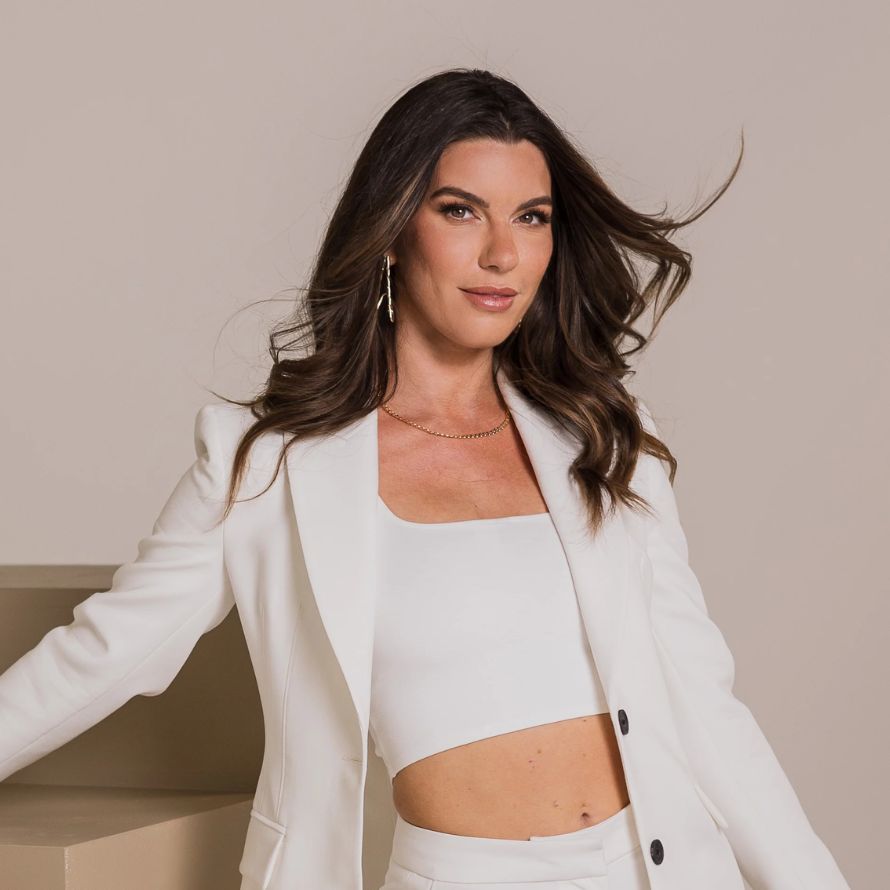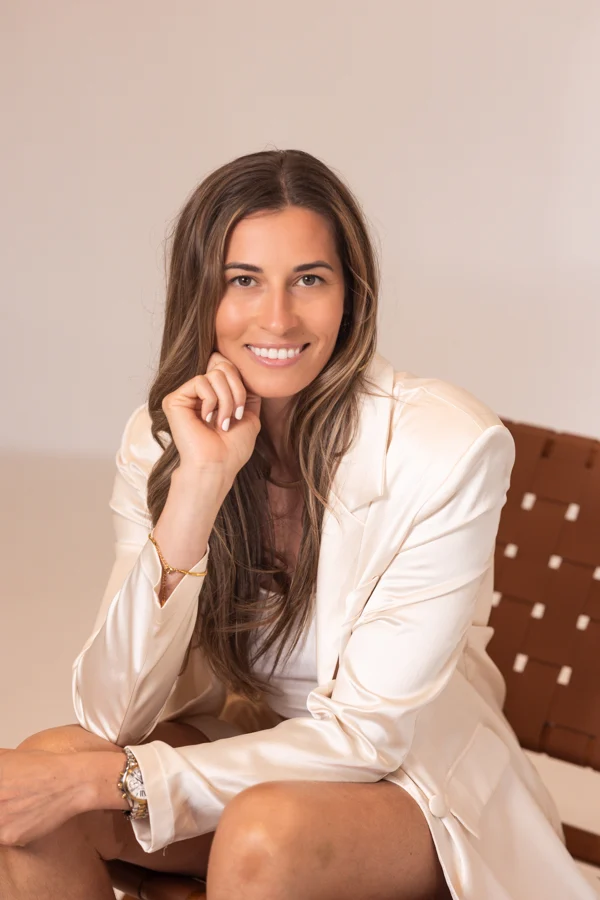


Tiffany Hurd is a Microdosing Advisor, Psychedelic Business Mentor, and speaker whose work helps practitioners and leaders build ethical, sustainable businesses within the psychedelic ecosystem. Her approach sits at the intersection of strategy, integrity, and lived experience, supporting individuals in translating personal insight into grounded, real-world offerings.
As a faculty member for both the Psychedelic Practitioner Certification and the Microdosing Practitioner Certification, Tiffany brings the depth of her expertise to teach our students practitioner business foundations and microdosing coaching. Her presence reflects our commitment to supporting practitioners not only in working with psychedelic medicine, but in building aligned, sustainable paths within the broader field.
Tiffany offers both her direct experience with psychedelic practice and her deep understanding of what it takes to build responsibly in an emerging space. Her work emphasizes differentiation, ethical boundaries, and long-term thinking in a landscape that often moves quickly.
In the reflections below, Tiffany shares her perspective on practitioner responsibility, the role of microdosing, and what it means to build with integrity.
Questions with Tiffany
From your perspective, what feels most important for the psychedelic field to get right in the next 5–10 years?
What feels most important over the next 5–10 years is creating trusted, reliable access to psychedelic plant medicines while ensuring the people guiding others are truly trained, ethical, and operating within clear boundaries. As demand continues to grow, we have to prioritize education and integration just as much as the medicine itself, because the real transformation happens in how people prepare, integrate, and apply these experiences.
If we can responsibly anchor this work, we create space to honor the indigenous origins of these medicines while also giving people who don’t yet have the language a safe, intentional way to work with them, setting the field up for real, long-term impact rather than hype or extraction.
How do psychedelics intersect with your specific domain of work or inquiry? What feels most misunderstood or under-appreciated from where you sit?
Psychedelics intersect with my work through teaching entrepreneurs and leaders how to build ethical, sustainable businesses in a rapidly expanding psychedelic field, while staying in integrity with the medicine and their own lived experience.
What’s most misunderstood is building a business in psychedelics has its own challenges and ways of operating that require individuals to get creative on how they can differentiate themselves from what everybody else is offering.
Psychedelics were never intended to fit in a box, and your business shouldn’t either.
What do you think practitioners today most need to cultivate in themselves—not just learn intellectually—in order to work responsibly with these tools?
Their authentic voice and how they want to represent themselves in the field. This is the foundation.
Is there a principle, practice, or insight that has become central to how you approach healing, growth, or transformation? How did that understanding develop for you?
A core principle that guides my work is slowing down and getting present, with the medicine, with the market, and with myself. Over time, I’ve learned that building aligned offerings isn’t about forcing ideas into existence, but about listening: doing real market research while also paying attention to how the medicines want to be served, in what capacity, and in what format.
That understanding developed through years of working with psychedelics as an ongoing, intentional practice, where clarity comes from moving strategically, but never from pushing, rushing, or bypassing the process.
What’s a question you find yourself returning to again and again in your work right now? Why is it important to you?
A question I return to again and again is: What doesn’t exist yet, and what does the market actually need right now?
It’s important to me because I’m not interested in rinse-and-repeat models. I’m building for longevity, which means creating from a place of service while still honoring the realities of running a business.
That question keeps me listening, adapting, and designing offerings that are both aligned and genuinely useful, rather than just replicating what’s already out there.
When you think about microdosing specifically, what do you see as its most responsible or promising role within the broader psychedelic ecosystem? Where does discernment matter most?
When I look at microdosing, I genuinely see it as one of the most responsible and promising entry points within the broader psychedelic ecosystem. At low doses, it offers people accessible, low-risk ways to work with different medicines for specific goals, whether that’s leadership, creativity, emotional regulation, or overall well-being, while still fitting into day-to-day life.
We’re already seeing its impact with leaders, innovators, and people seeking holistic alternatives or complements to psychiatric medications, and a recent RAND survey showed that in 2025, over 10 million U.S. adults reported microdosing, which speaks to both the demand and cultural shift happening.
Where microdosing really shines is in its versatility. It meets people where they are and supports long-term change through consistency rather than intensity. That said, discernment is essential around education, dosing, intentions, and integration. Microdosing isn’t about bypassing deeper work or treating it like a productivity hack.
When approached intentionally, it becomes a powerful tool for sustainable growth, but without guidance and context, it risks being misunderstood or misused.
What excites you about contributing to the Psychedelic Coaching Institute’s training programs at this moment in time?
What excites me most about contributing to this training right now is the opportunity to help shape how people are entering and contributing to the psychedelic ecosystem. As demand continues to grow, we need practitioners who are not only knowledgeable about the medicine, but who understand ethics, education, the landscape, integration, and how their work fits into the larger system.
What drew you to contribute to the Psychedelic Coaching Institute’s training programs overall?
The opportunity to support people who are actively stepping into this work and want to do it with integrity. Knowing that my experience and perspective can help practitioners think more clearly about ethics, education, boundaries, and sustainability feels meaningful, especially at a time when the field is growing so quickly.
Supporting a program that prioritizes responsibility and thoughtful contribution to the broader psychedelic ecosystem is deeply aligned with how I approach this work.
Tiffany’s perspective is woven into the Psychedelic Coaching Institute’s training programs, where practitioners are supported in developing not only competency with psychedelic tools, but clarity in how they choose to contribute to this evolving field. Learn more about upcoming cohorts and program pathways.