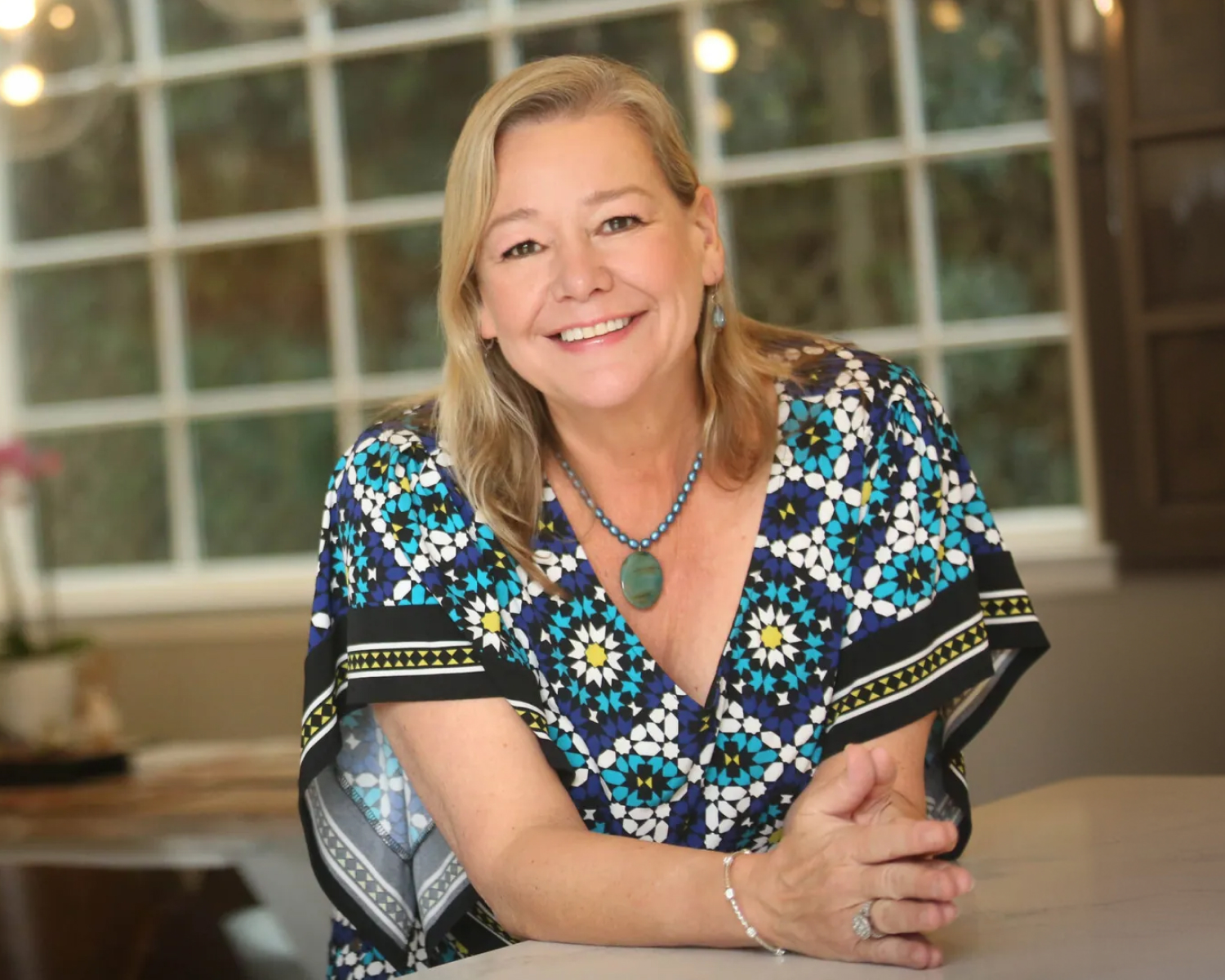


Lee Richter has spent decades building companies, protecting intellectual property, and creating educational communities. She has helped companies and global brands turn ideas into businesses and lasting impact, and she mentors entrepreneurs through periods of change. Her work sits where leadership, innovation, conscious entrepreneurship, learning, systems thinking, and AI meet psychedelic practice.
Lee is guest faculty for the Psychedelic Practitioner Certification, whose next cohort begins on January 20, 2027. Her question for practitioners is how to help people change internally before asking them to build externally. In the reflections below, Lee shares why she thinks the next decade is about sustainable systems rather than more proof of concept, what practitioners need beyond a certificate, and why microdosing needs honest framing.
Questions with Lee
From your perspective, what feels most important for the psychedelic field to get right in the next 5–10 years?
I believe the next decade is less about proving that psychedelics can create transformational experiences; we already have compelling evidence that they can under carefully controlled conditions.
The larger challenge is creating systems that allow transformation to become sustainable.
That means building ethical standards, practitioner training, careful screening, integration, and long-term outcome measurement.
As someone who has spent decades building companies, protecting intellectual property, and creating educational communities, I naturally think in terms of systems.
If these medicines become widely available without equally investing in practitioner development, ethics, and integration, we risk creating short-term breakthroughs without long-term transformation.
I also believe technology, including AI, can help practitioners personalize education, improve preparation and integration, identify patterns, and increase access without replacing human wisdom.
The future should be human-centered and evidence-informed.
How do psychedelics intersect with your work, and what feels most misunderstood from where you sit?
They intersect with almost everything I care about:
Leadership
Innovation
Conscious Entrepreneurship
Learning
Systems Thinking
AI
Legacy Building
For decades, I’ve helped companies and global brands turn ideas into businesses and intellectual property into lasting impact.
Psychedelics introduce a fascinating question:
How do we help people change internally before asking them to build externally?
Many entrepreneurs don’t need more information.
They need more clarity.
More emotional flexibility.
Greater alignment.
The combination of responsible psychedelic work, AI-assisted reflection, coaching, and community has the potential to help leaders make wiser decisions.
Transformation is often confused with the experience itself.
The experience is only one chapter.
Integration is the book.
The neuroscience is exciting.
The mystical experiences are compelling.
But lasting change usually happens afterward through reflection, relationships, habits, coaching, and community.
As someone who builds educational ecosystems, I believe we need to spend as much time designing integration as we do designing experiences.
What do you think practitioners today most need to cultivate in themselves, not just learn intellectually, in order to work responsibly with these tools?
Humility.
Curiosity.
Listening.
Self-awareness.
Ethics.
No certification can substitute for emotional maturity.
Roland Griffiths often emphasized scientific rigor while also acknowledging how much remains unknown about consciousness.
Near the end of his life, he reflected:
“Scientifically, we remain deeply ignorant about the nature of consciousness.”
That humility should become part of every practitioner’s training.
Is there a principle, practice, or insight that has become central to how you approach healing and transformation? How did that understanding develop for you?
Transformation is not something we do to people.
It’s something we help create the conditions for.
Whether someone uses meditation…
Coaching…
Psychedelics…
or another modality…
Lasting change comes when insight becomes action.
That requires safety.
Reflection.
Practice.
Accountability.
Community.
My understanding developed through building businesses, leading teams, mentoring entrepreneurs, and participating with thousands of people navigating change.
People sustaining transformation were not necessarily the most gifted.
They design and implement systems.
They build meaningful relationships.
Reflection and mentorship.
Lifelong learner.
Consistently uplevel.
Each of these life lessons applies to psychedelic work.
What’s a question you find yourself returning to again and again in your work right now? Why is it important to you?
How do we help more people experience profound transformation while defining and preserving safety, ethics, and humanity?
How do we help more people experience profound transformation while defining and preserving safety, ethics, and humanity?
Because every transformational movement eventually faces the challenge of scale.
Technology can amplify wisdom and technology can amplify harm.
The choices we make today will determine the future we create.
When you think about microdosing specifically, what do you see as its most responsible or promising role within the broader psychedelic ecosystem? Where does discernment matter most?
I see microdosing as one tool within a much larger ecosystem.
It may support creativity, mood, flexibility, and learning for some individuals, but it is not a universal solution.
The strongest evidence for therapeutic outcomes currently exists for carefully supervised psychedelic-assisted therapy using full therapeutic doses in clinical settings, while evidence for microdosing remains mixed and is still developing.
Microdosing should complement, not replace, coaching, healthy habits, psychotherapy when appropriate, and community support.
Discernment matters everywhere.
Especially:
Screening
Contraindications
Practitioner competence
Expectations
Informed consent
Integration
Commercialization
The field should resist the temptation to promise miracles.
Science deserves patience.
People deserve honesty.
What excites you about contributing to this training at this moment in time?
Because education scales wisdom.
One excellent practitioner helps dozens.
One excellent teacher helps thousands.
I’m excited about helping practitioners think beyond techniques and toward systems, ethics, innovation, leadership, AI, and lifelong learning.
I see this as a rare moment.
Several fields that have historically operated independently are beginning to converge:
Neuroscience
Coaching
Leadership
Technology
Systems thinking
Contemplative practice
Helping shape convergence at this time feels meaningful.
Researchers Lee recommends following: Robin Carhart-Harris, PhD (UCSF); Jennifer Mitchell, PhD (UCSF); Joshua Woolley, MD, PhD (UCSF); and, as a foundational researcher, Roland Griffiths, PhD (Johns Hopkins).
Books she suggests: How to Change Your Mind (Michael Pollan), Sacred Knowledge (William Richards), The Psychedelic Explorer’s Guide (James Fadiman), Consciousness Medicine (Francoise Bourzat), and The Antidepressant Guide.
Lee’s perspective reflects the Psychedelic Coaching Institute’s commitment to training practitioners who think in systems, hold ethics as a daily practice, and take integration as seriously as the session itself. Her work reminds us that sustainable transformation depends on the structures built around the experience.
Connect with Lee on LinkedIn or Instagram, or watch her conversations on Problems to Profit and Win The Day.
Learn from Lee in the Psychedelic Practitioner Certification, starting January 20, 2027.
Learn to support psychedelic preparation and integration while respecting the boundaries between coaching and therapy. Our Practitioner Certification Program helps you build the skills to work ethically and recognize when a client needs clinical support.


